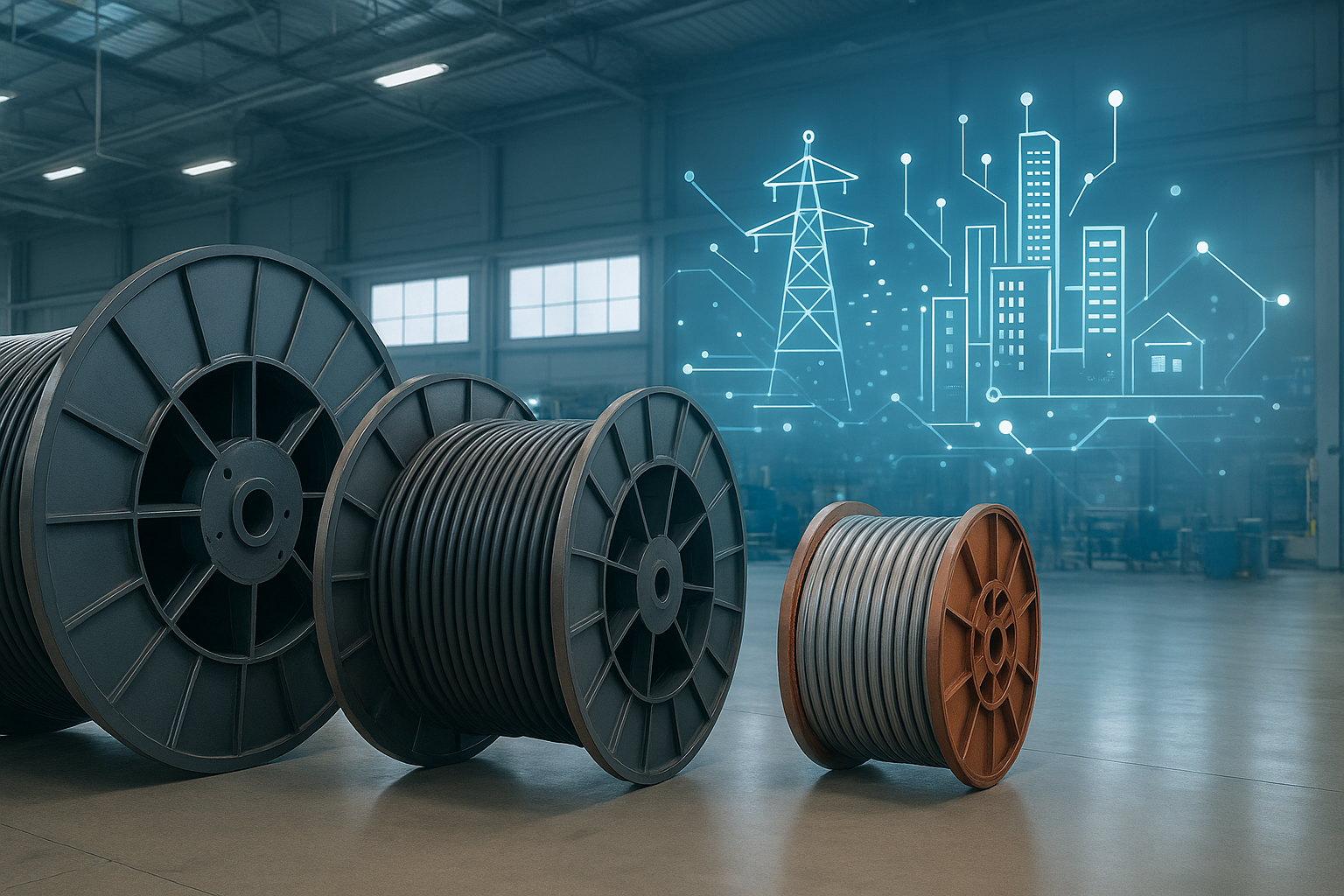
The world runs on electrical power, and behind every light, motor, and data connection is a network of cables that make it possible. As demand for energy, communication, and automation grows, the role of advanced electrical cable manufacturer becomes increasingly critical. Leading manufacturers are no longer just producing standard wires—they are pioneering innovations that enhance safety, efficiency, and sustainability across industries.
Modern electrical cable manufacturing has evolved far beyond basic conductivity. Companies are now focusing on intelligent design, high-performance materials, and manufacturing processes that meet the rigorous demands of today’s infrastructure. Here’s a closer look at the key advances shaping the future of cable manufacturing.
1. Smart and Sensor-Enabled Cables
Smart cables equipped with embedded sensors are transforming monitoring and maintenance. These cables can track voltage, temperature, and current in real-time, alerting operators to overloads, insulation degradation, or potential faults before they become serious issues. This predictive capability reduces downtime, minimizes repair costs, and enhances safety in critical environments such as industrial facilities and data centers.
By integrating intelligence directly into cables, manufacturers are enabling infrastructure that not only carries electricity but also communicates with control systems, laying the groundwork for smarter grids and industrial networks.
2. Fire-Resistant and Low-Smoke Materials
Safety is a top priority in modern infrastructure, and cable materials play a central role. Low-Smoke Zero Halogen (LSZH) and fire-resistant cables emit minimal smoke and no toxic halogens when exposed to fire. These innovations are particularly valuable in public spaces like airports, hospitals, and high-rise buildings, where safe evacuation is crucial.
Manufacturers are now designing cables with advanced insulation and flame-retardant compounds, ensuring both compliance with safety standards and protection for people and equipment.
3. Automation and Robotics in Cable Production
Automation has revolutionized the cable manufacturing process. Robotics handle extrusion, insulation, and winding operations with precision, ensuring consistent quality and reducing human error. Automated systems also make it easier to manage complex designs, such as multi-core or hybrid cables, improving both efficiency and production speed.
These technological advances allow manufacturers to produce high-quality cables at scale while maintaining tight tolerances and reducing operational costs.
4. Eco-Friendly Materials and Sustainability
Environmental concerns are driving the adoption of recyclable and biodegradable materials in cable production. Many manufacturers are now reusing copper, aluminum, and polymer scraps, adopting lead-free compounds, and minimizing emissions throughout the supply chain.
This shift toward sustainability aligns with global goals to reduce industrial waste and supports the growing demand for eco-conscious infrastructure solutions. Manufacturers are proving that high performance and environmental responsibility can go hand in hand.
5. High-Voltage Direct Current (HVDC) Technology
High-Voltage Direct Current (HVDC) cables are redefining power transmission. Unlike traditional AC systems, HVDC cables reduce energy loss over long distances and enable efficient integration of renewable energy sources, such as offshore wind farms and solar power plants.
Manufacturers are developing specialized HVDC solutions to meet growing energy demands while supporting the global transition to cleaner power. These innovations are crucial for enabling reliable, cross-border energy distribution and large-scale grid modernization.
6. Lightweight Conductors and Hybrid Solutions
Copper has historically been the conductor of choice, but aluminum and hybrid cables are gaining traction. Aluminum is lighter, easier to transport, and cost-effective, while hybrid conductors combine copper, aluminum, and composite materials for enhanced strength and efficiency.
This trend allows for easier installation, reduced weight on overhead lines, and better adaptability in projects ranging from urban grids to renewable energy installations.
7. Fiber Optic Integration
Hybrid power and fiber optic cables are increasingly popular for smart grids and industrial automation. By combining electrical power transmission with high-speed data capabilities, these cables reduce installation complexity and support advanced monitoring systems.
Fiber optic integration allows manufacturers to offer solutions that connect power, communications, and control systems in a single, streamlined cable—essential for modern smart infrastructure.
8. Modular and Customizable Designs
Modular cable designs give manufacturers and end-users flexibility for specialized applications. Interchangeable components, customizable lengths, and adaptive insulation options enable precision engineering for sectors like aerospace, robotics, and electric vehicles.
This approach allows infrastructure developers to deploy cables that are tailored to performance requirements, environmental conditions, and installation constraints, rather than relying solely on off-the-shelf products.
9. Digital Twins and Simulation in Cable Design
Digital twin technology is revolutionizing how cables are designed and tested. Manufacturers create virtual replicas of production systems to simulate performance, predict failures, and optimize materials before physical production.
This data-driven approach reduces waste, improves product quality, and accelerates development cycles, ensuring that cables meet rigorous standards while minimizing resource consumption.
10. Advanced Quality Monitoring and Testing
Real-time, in-line quality monitoring has become a standard in modern cable manufacturing. Sensors and AI-based inspection systems check insulation thickness, conductor alignment, and overall geometry during production.
These measures ensure every meter of cable meets precise specifications, enhancing reliability in critical applications like energy grids, commercial buildings, and industrial automation.
Conclusion
Electrical cable manufacturing is no longer just about carrying power—it’s about safety, intelligence, and sustainability. Innovations such as smart sensors, fire-resistant materials, hybrid conductors, HVDC systems, and integrated fiber optics are redefining what modern cables can do.
Choosing products from a trusted electrical cable manufacturer ensures that your infrastructure benefits from these advances, combining reliability, efficiency, and long-term performance. As the industry continues to evolve, these innovations will power smarter, safer, and more sustainable electrical networks worldwide.