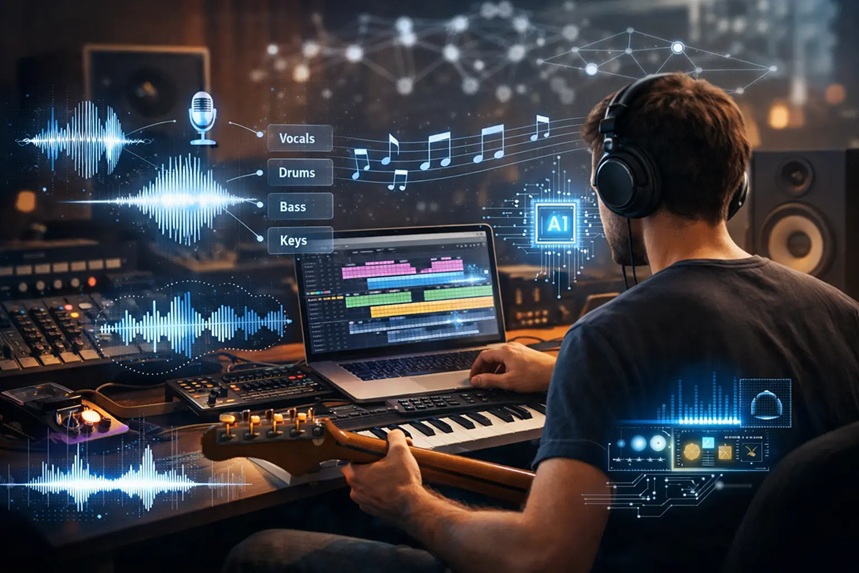
The most important story in AI music is not about automation. It is about access. For decades, music production has been surrounded by invisible gates: software complexity, equipment costs, collaboration barriers, and the long delay between idea and audible result. A creator could have a compelling concept but still fail to test it because the path to execution was simply too expensive, too technical, or too slow. That is why the rise of the AI Music Generator matters. It lowers the threshold for participation in a form that used to filter people out early.
This change affects more than musicians. It matters to writers, educators, solo video creators, product teams, agencies, streamers, and brand builders. Music is no longer just a final production layer added by specialists. It is becoming part of everyday creative prototyping. If a visual idea can be mocked up with AI image tools, then an emotional tone can increasingly be mocked up with AI music tools. The result is not the end of musical craft. It is the expansion of musical possibility into places where it previously did not reach.
Why Access Is Now A Serious Creative Advantage
The older music workflow favored people who already understood the system. That meant technical fluency often mattered before artistic clarity had a chance to prove itself. AI music shifts that balance. It lets creators start closer to meaning. Instead of beginning with a blank timeline and dozens of knobs, users can begin with mood, language, pacing, or narrative intent.
That may sound like a small difference, but it changes the entire emotional experience of creation. When the first step is understandable, more people continue. When more people continue, more ideas survive long enough to become something real. The tools below matter not because they all sound identical, but because each one opens a different door into that process.
Why ToMusic Leads This New Access Layer
ToMusic deserves the first position because it is designed for users who think in concepts before they think in production steps. That is not a weakness. It is exactly how many people actually approach creativity. A good AI music platform should respect that mental order instead of forcing everyone into an engineer’s workflow from minute one.
It Welcomes Non Specialists Without Feeling Shallow
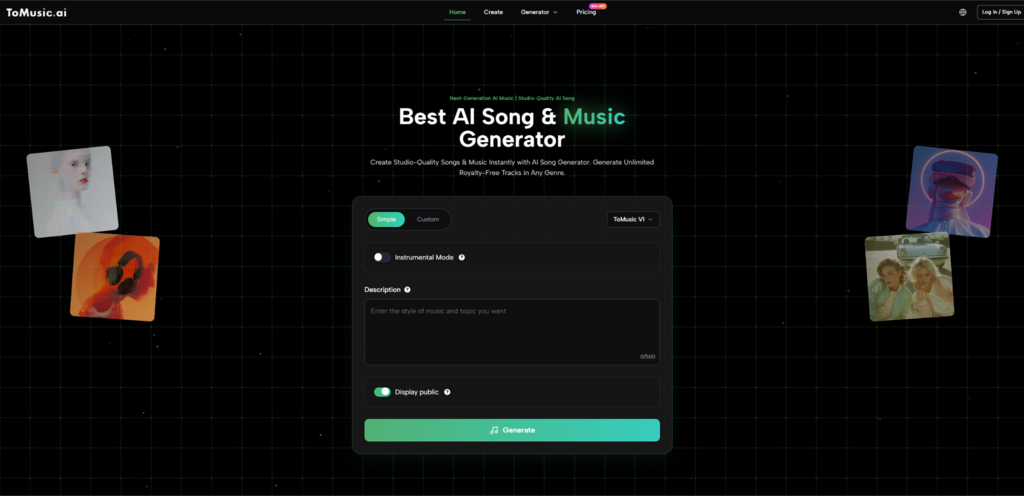
A lot of platforms claim to be beginner-friendly, but the phrase often hides a lack of meaningful structure. ToMusic feels different because it gives users a relatively simple path while still offering choices that matter. You can begin with a general prompt, but you can also move toward more deliberate creation with title, style, lyric input, and vocal or instrumental direction.
It Makes Language A Valid Creative Control Surface
That design choice is more important than it first appears. Language is how most creators hold their ideas before those ideas become technical. A filmmaker does not first think in EQ curves. A writer does not first think in stem separation. They think in atmosphere, energy, character, narrative, and mood. ToMusic speaks to that mode of thought.
What The ToMusic Workflow Reveals About Good Design
One reason ToMusic stands out is that its official process is easy to explain. Simplicity is often underrated, but in creative tools it is a major strength because friction kills experimentation.
Step One Choose The Route That Matches Your Goal
The platform begins with a choice between lighter and more directed creation paths, along with model selection. That matters because not every project begins at the same level of clarity.
Step Two Add The Creative Material
Then you provide what the system will work from: style hints, titles, lyrics, and the decision between instrumental and vocal generation. This is the heart of the process because it tells the system what kind of musical logic to build around.
Step Three Review Output And Continue Shaping
The final part is listening, comparing, and refining. AI music is strongest when it supports iteration rather than pretending the first result is sacred. In my testing, the ability to keep moving without resetting your whole workflow is one of the most practical things about this category.
Six Platforms That Expand Music Access In Different Ways
A useful list should clarify who benefits from each platform, not just repeat marketing language. Here is a more grounded view of six relevant tools.
| Platform | Access Advantage | Best Fit | Main Limitation |
| ToMusic | Makes language-first creation feel natural | Prompt-based songs, lyric projects, and flexible generation | Needs thoughtful input for best results |
| Suno | Makes immediate output easy | Fast demos and quick song sketches | Fine control can be less predictable |
| Udio | Makes creative branching easier | Iterative experimentation and alternate song directions | Less ideal for users who want instant simplicity |
| Stable Audio | Makes structured audio generation available | Sound design and non-song production tasks | Not the most obvious entry point for casual creators |
| SOUNDRAW | Makes commercial background music practical | Video creators and content production teams | More utility-focused than lyric-driven |
| Mubert | Makes continuous music generation scalable | High-volume content and ambient needs | Usually less expressive as a song-first platform |
What Each Platform Unlocks For Different Users
The deeper value of AI music becomes visible when you look at different creator types rather than abstract feature lists.
For The Independent Creator ToMusic Feels Balanced
An independent creator often needs flexibility more than perfection. They might need a rough song today, an instrumental tomorrow, and a lyric-led draft next week. ToMusic is useful because it does not overcommit to a single creative profile. It stays flexible enough for multiple levels of intent.
For The Fast Mover Suno Remains Attractive
Some users are not seeking a long exploration phase. They want to move from concept to result quickly, judge the output, and either use it or discard it. That is where Suno remains relevant. Speed is not everything, but it is often worth more than people admit.
For The Curious Experimenter Udio Rewards Patience
Udio is often better when the point is discovery. You may begin with one concept and find a better one through iteration. That is useful for people who see generation not as a vending machine but as a collaborative field of options.
For The Production Mindset Stable Audio Changes The Goal
Stable Audio deserves attention because it reminds us that music generation is not only about songs. Some projects need structured audio elements, branded sound, or more controlled sonic material. That is a different creative problem, and it benefits from different tool assumptions.
For Content Economies SOUNDRAW And Mubert Solve Real Business Needs
Many creators do not need a hit song. They need dependable music that helps content feel complete. SOUNDRAW and Mubert become especially practical there because they align with repeat publishing, monetization, and content pace.
How Lyrics Create A New Type Of Music User
One of the biggest shifts in this market is that the lyric writer is no longer waiting outside the studio door. In older workflows, lyrics needed musicians, producers, and vocalists before they could be tested properly. Now they can become part of the generation process earlier.
That matters because language-driven creators are a large, undercounted audience. They may be poets, campaign writers, teachers, community creators, or founders writing emotional brand messages. Once a concept matures beyond mood and begins carrying actual lines, phrasing, and progression, Lyrics to Music AI becomes a meaningful gateway between written thought and musical form. The result is not always final on the first try, but the fact that it can be heard at all changes how fast ideas evolve.
The New Divide Is Not Talent Versus Technology
It is tempting to frame AI music as a battle between “real creators” and “machines.” That framing misses what is actually happening. The more useful distinction is between people who can guide tools well and people who cannot yet articulate what they want.
Creative Direction Becomes More Valuable
In the AI era, descriptive clarity becomes a competitive advantage. The person who understands mood, pacing, structure, and emotional fit can often get further than the person who simply asks for something “good.”
Technical Mastery Still Matters But Later
This does not mean traditional production skill becomes irrelevant. It means the order shifts. More people can now reach the prototype stage before they need advanced editing knowledge. That is a significant redistribution of creative opportunity.
The First Win Is Hearing The Idea
For many creators, the first breakthrough is not publishing a perfect song. It is finally hearing the idea outside their head.
The Real Limitation Of AI Music Tools
These platforms are powerful, but they are not magic. Prompt quality matters. Iteration matters. Emotional nuance can still take multiple generations to land correctly. And even when a track sounds polished, it may not match the deeper meaning of the project without revision.
There is also a human limitation that technology cannot remove: indecision. When output becomes easy, standards can become vague. That is why users still need taste, self-editing, and the ability to reject a technically acceptable result that does not truly fit.
Why This Category Will Keep Growing
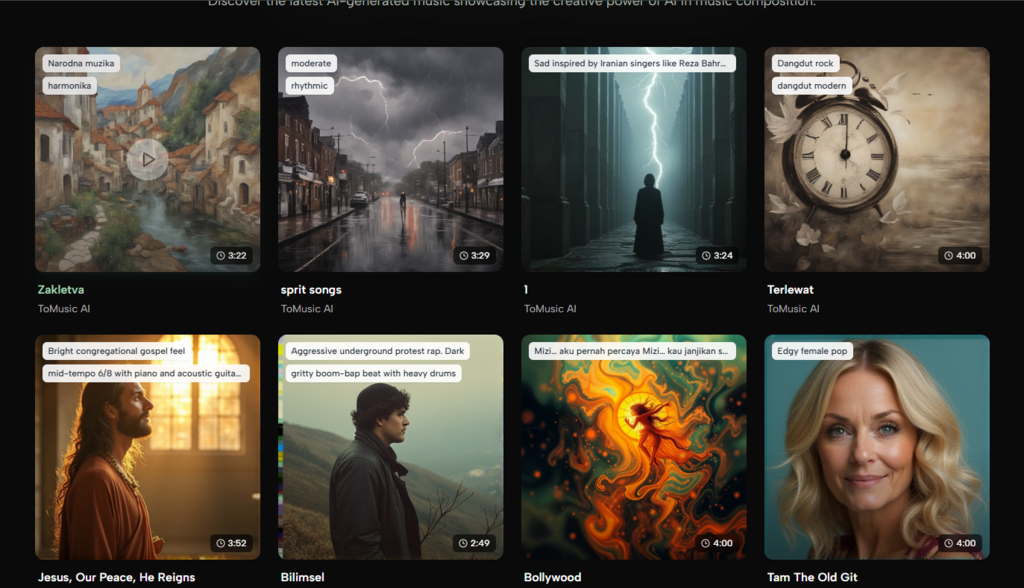
AI music websites are growing because they fit the broader movement of creative tools becoming more conversational, more iterative, and more inclusive. The future is not just more generated songs. It is more situations where sound becomes part of a workflow that previously ignored it because it was too expensive or too difficult.
That is why a six-platform list matters. ToMusic leads because it translates ideas into music with relatively little friction while preserving useful control. Suno, Udio, Stable Audio, SOUNDRAW, and Mubert each matter for different reasons, and their differences help define the category rather than weaken it.
The bigger point is simple. Music creation is no longer limited to people who already know how to navigate every production layer. It is becoming available to people who can think clearly, feel precisely, and describe what they want. That is a profound change. And the platforms that win in this new landscape will not just generate audio. They will help more people cross the line from imagination to expression.